
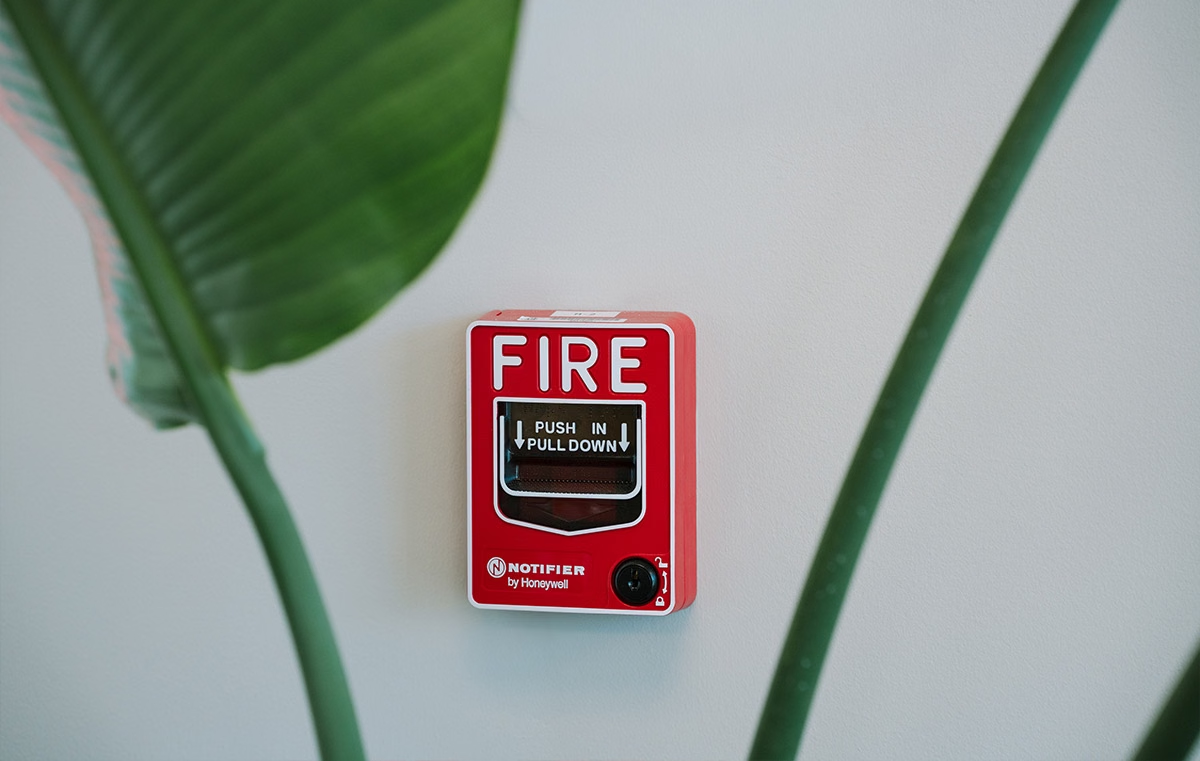
October is Fire Prevention Month, making it a useful time for Tennessee facility managers to review the systems, documentation, and inspection schedules behind their building’s fire protection plan.
Commercial fire safety is not a one-time installation project. It is an ongoing responsibility involving inspections, testing, maintenance, recordkeeping, and coordination with the authority having jurisdiction—often a local fire marshal or code official. Exact requirements vary by occupancy type, installed equipment, adopted code edition, and local amendments. For that reason, a qualified fire-alarm professional and the local AHJ should always be part of the compliance conversation.
For many organizations, the most effective approach is straightforward: know what equipment you have, know what testing it requires, retain the records, and resolve deficiencies before the next inspection or emergency.
Start With Your System Inventory
A commercial fire safety review begins with a clear picture of what protects the facility. This may include more than smoke detectors and pull stations.
Your inventory may include:
- Fire alarm control panels and batteries
- Smoke, heat, duct, and beam detectors
- Manual pull stations
- Horns, strobes, speakers, and voice-evacuation devices
- Sprinkler waterflow and valve-tamper monitoring
- Fire doors, magnetic door holders, and elevator recall interfaces
- HVAC shutdown functions
- Emergency responder communication systems, where required
- Off-site fire-alarm monitoring and communications equipment
A current system inventory helps facility teams identify missing records, aging devices, inactive equipment, and building changes that may affect coverage. Renovations, layout changes, tenant improvements, and occupancy changes can all create a need for review.
Understand Inspection Requirements
No single inspection calendar applies to every Tennessee business. Fire-alarm inspection requirements depend on the system, building occupancy, applicable code, and the authority having jurisdiction.
That said, many commercial fire alarm systems require routine checks and periodic professional testing. A practical commercial fire safety calendar may include:
- Monthly visual checks or tests assigned to building staff, when required.
- Quarterly testing of selected components or supervisory functions.
- Semiannual testing where required by the system or applicable code.
- Annual inspection, testing, and certification by a qualified fire-alarm contractor.
- Additional testing after repairs, renovations, system modifications, or a deficiency correction.
Do not assume a previous schedule still applies. Confirm testing intervals with your fire-alarm contractor and local fire marshal, especially after an occupancy change, renovation, or system upgrade.
Fleenor’s existing Tennessee inspection guide notes that Tennessee follows NFPA 72 requirements as enforced by the State Fire Marshal’s Office and local AHJs, while also emphasizing that local jurisdictions may impose stricter requirements.
Keep Compliance Documentation Organized
An inspection is only part of the compliance picture. Facility managers also need clear, accessible documentation showing what was inspected, what passed, what failed, and how deficiencies were handled.
Maintain records such as:
- Current inspection, testing, and maintenance reports
- Annual certification documentation, if applicable
- Monitoring certificates and account information
- System drawings, device lists, and equipment manuals
- Service tickets and repair records
- Deficiency reports and proof of correction
- Battery replacement and panel-service records
- Fire marshal correspondence, permits, and approvals
- Staff training or emergency-drill documentation, when applicable
An AHJ, insurer, property owner, tenant, lender, or prospective buyer may request these records. Keeping them in one accessible location also helps new facility managers understand the building’s history rather than starting from scratch.
A commercial fire safety audit should identify missing records and equipment concerns. If a device has been replaced, a panel upgraded, or a space has changed use, ensure the related documentation reflects current conditions.
Address Deficiencies Promptly
A failed inspection does not always mean a business must close, but it should never be treated as routine paperwork. The significance of a deficiency depends on the issue, the building, and the AHJ’s determination.
Common concerns can include:
- Devices that fail to activate or communicate properly
- Audible or visual notification appliances that do not function as designed
- Missing inspection records or overdue testing
- Aging or depleted backup batteries
- Obstructed, painted, damaged, or improperly located devices
- Changes in occupancy or building layout that affect system coverage
- Impaired sprinkler monitoring, fire doors, or auxiliary functions
Unresolved deficiencies can lead to required repairs, reinspection, citations, insurance concerns, operational restrictions, or other enforcement measures determined by the AHJ. More importantly, a nonfunctioning component may reduce the warning time occupants need during a real emergency.
The right response is to document the issue, determine the required corrective action, and work with qualified professionals and the AHJ as needed. Avoid making informal adjustments to a commercial fire-alarm system without the appropriate expertise or approvals.
Consider UL-Listed Monitoring
A monitored fire-alarm system can provide an additional layer of protection by transmitting alarm signals to a monitoring center. For a commercial property, that may support a faster response process when an alarm occurs after hours or when the building is unoccupied.
Monitoring does not replace inspection, maintenance, evacuation planning, or fire-safety training. It is one part of a broader commercial fire safety strategy that should include reliable detection, notification, documented testing, and clear procedures for employees and occupants.
Work With a Qualified Partner
Choosing a fire alarm inspection company is about more than scheduling the annual visit. Your provider should be able to help document inspections, explain deficiencies, coordinate with the AHJ when appropriate, and support system design or upgrades when a facility changes.
Fleenor Security holds a Tennessee Alarm Contractor license, maintains NICET-certified personnel, and lists UL certifications for fire alarm systems and central-station monitoring. Its commercial fire team provides fire-alarm design, installation, inspection, maintenance, repair, and monitoring services for facilities throughout the region. View Fleenor’s certifications and licenses.
We also offer a no-cost Enterprise Protection Assessment that can review operational needs, facility vulnerabilities, and compliance gaps. Use it as a starting point for a broader commercial fire safety audit, not as a substitute for an AHJ inspection or code determination.
Take the Next Step
Fire Prevention Month is a timely reminder that commercial fire safety depends on preparation long before an alarm occurs. Review your inspection schedule, gather your current records, document open deficiencies, and confirm that your system still matches the building you operate today.
To schedule a commercial fire-alarm inspection or discuss your facility’s fire-protection needs, contact Fleenor Security.
Knoxville: Call (865) 544-9964 | Johnson City: Call (423) 282-3755