November is Carbon Monoxide Awareness Month, a reminder to check your home’s protection before colder weather arrives. As East Tennessee families use furnaces, fireplaces, gas logs, and fuel-burning space heaters more often, preventing carbon monoxide exposure becomes especially important.
Carbon monoxide, or CO, is a gas you cannot see or smell. The Centers for Disease Control and Prevention reports that more than 400 Americans die each year from unintentional CO poisoning not linked to fires, and more than 100,000 visit emergency departments. Working alarms, appliance maintenance, and an emergency plan help prevent exposure.
Choosing a carbon monoxide detector for home protection is an important first step. Placement, maintenance, and knowing how to respond matter just as much.
Where Carbon Monoxide Comes From
CO forms when fuels such as natural gas, propane, oil, gasoline, or wood burn incompletely. Household sources include:
- Gas or oil furnaces, boilers, and water heaters
- Gas ranges, fireplaces, gas logs, and wood stoves
- Fuel-burning space heaters
- Vehicles running in attached garages
- Portable generators
Blocked chimneys or appliance vents can trap exhaust and let CO build up indoors. Have a qualified technician service heating systems and fuel-burning appliances annually, and have chimneys checked or cleaned each year.
During an outage, run generators only outdoors, more than 20 feet from windows, doors, and vents. Never operate a generator, charcoal grill, or camp stove inside a home or garage, even with doors or windows open. Never run a vehicle in an attached garage, even with the garage door open.
Recognize the Symptoms and Respond Immediately
Common CO poisoning symptoms include headache, dizziness, weakness, upset stomach, vomiting, chest pain, and confusion. Symptoms can resemble the flu, making exposure easy to overlook. People who are asleep can die from CO poisoning before experiencing symptoms.
If a CO alarm sounds:
- Get everyone outside immediately.
- Call 911 from outside.
- Stay out until emergency responders say it is safe to return.
Do not wait for a monitoring-center call before evacuating.
Where to Place Carbon Monoxide Alarms
The National Fire Protection Association recommends CO alarms in a central location outside each sleeping area, on every level, and wherever applicable laws or codes require them.
| Location | Purpose |
| Outside each sleeping area | Helps ensure occupants can hear the alarm while sleeping |
| Every level, including the basement | Adds detection coverage on each floor |
| Additional manufacturer- or code-required locations | Addresses the home’s layout and applicable installation requirements |
Follow the manufacturer’s instructions for mounting height, distance from appliances, and additional locations. Don’t assume an alarm belongs beside a garage door or directly next to a fireplace. Some models restrict placement near doors, windows, drafts, or combustion equipment.
Choose battery-operated alarms or alarms with battery backup so protection remains available during power outages.
Testing, Replacement, and Tennessee Requirements
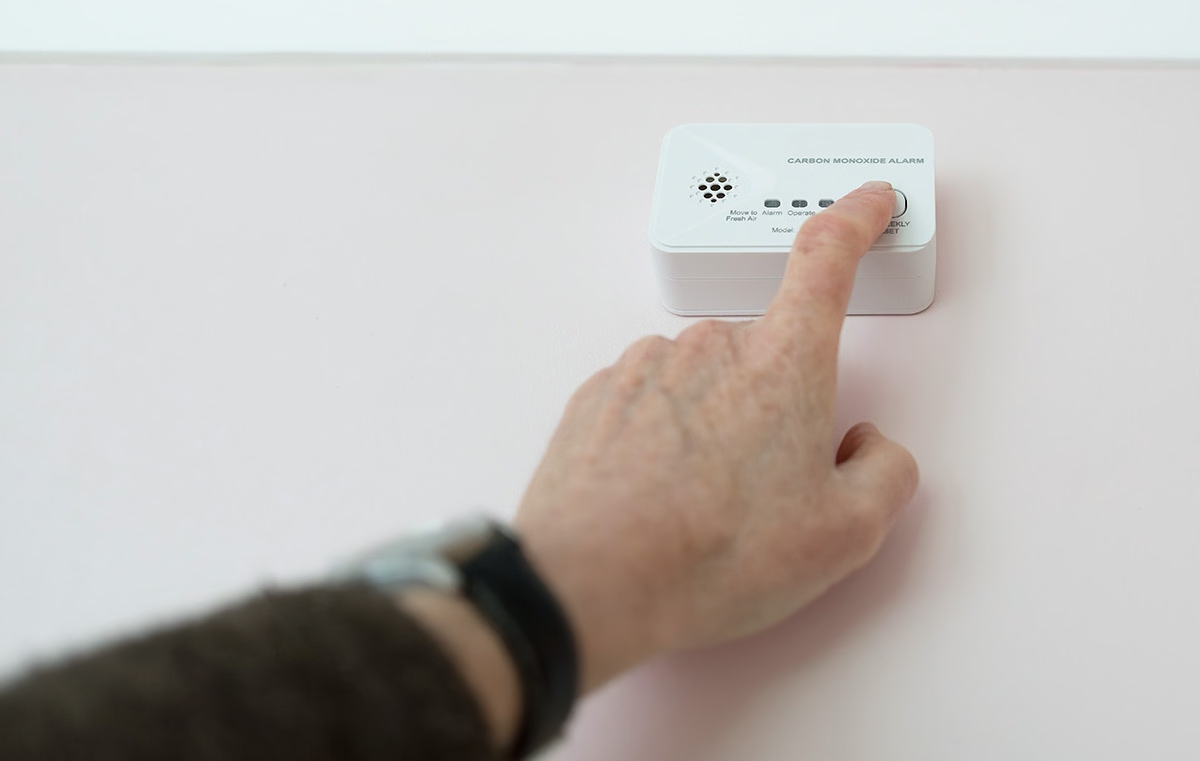
Test CO alarms at least monthly and replace them according to the manufacturer’s instructions. Check the manufacture or replacement date and learn your model’s end-of-life signal. A powered-on alarm may still need replacement.
Tennessee requirements depend on the code and amendments your jurisdiction enforces. The state lists the 2018 International Residential Code, with amendments, among its adopted codes. That code requires CO alarms in new dwellings with fuel-fired appliances or attached garages that open into the dwelling, and addresses certain work on existing homes. Ask your local building department what applies to your property.
How Monitored CO Detection Adds Protection
A standalone alarm sounds locally to warn occupants, including sleeping family members. A monitored detector adds an off-site response layer by sending an alarm signal to a monitoring center.
Fleenor’s UL-listed central station operates 24/7. Operators follow established response procedures, which may include contacting your household and requesting emergency assistance. App notifications depend on your equipment, system configuration, and monitoring plan.
Through environmental monitoring for home security, compatible low-temperature sensors can also report temperatures below a configured threshold. That may indicate heating trouble; it does not directly diagnose furnace failure. Fleenor can review whether your existing system supports these devices.
Take the Next Step Before Winter
Fleenor Security has served East Tennessee since 1972. During a no-cost home security evaluation, our team can review your CO coverage and recommend compatible detectors and available app alerts. Equipment, installation, and monitoring costs depend on the solution you select.
Schedule your consultation:
Knoxville: (865) 544-9964 | Johnson City: (423) 282-3755